

Blog
Rolex Sea-Dweller: 7 Reasons It’s the Ultimate Professional Dive Watch

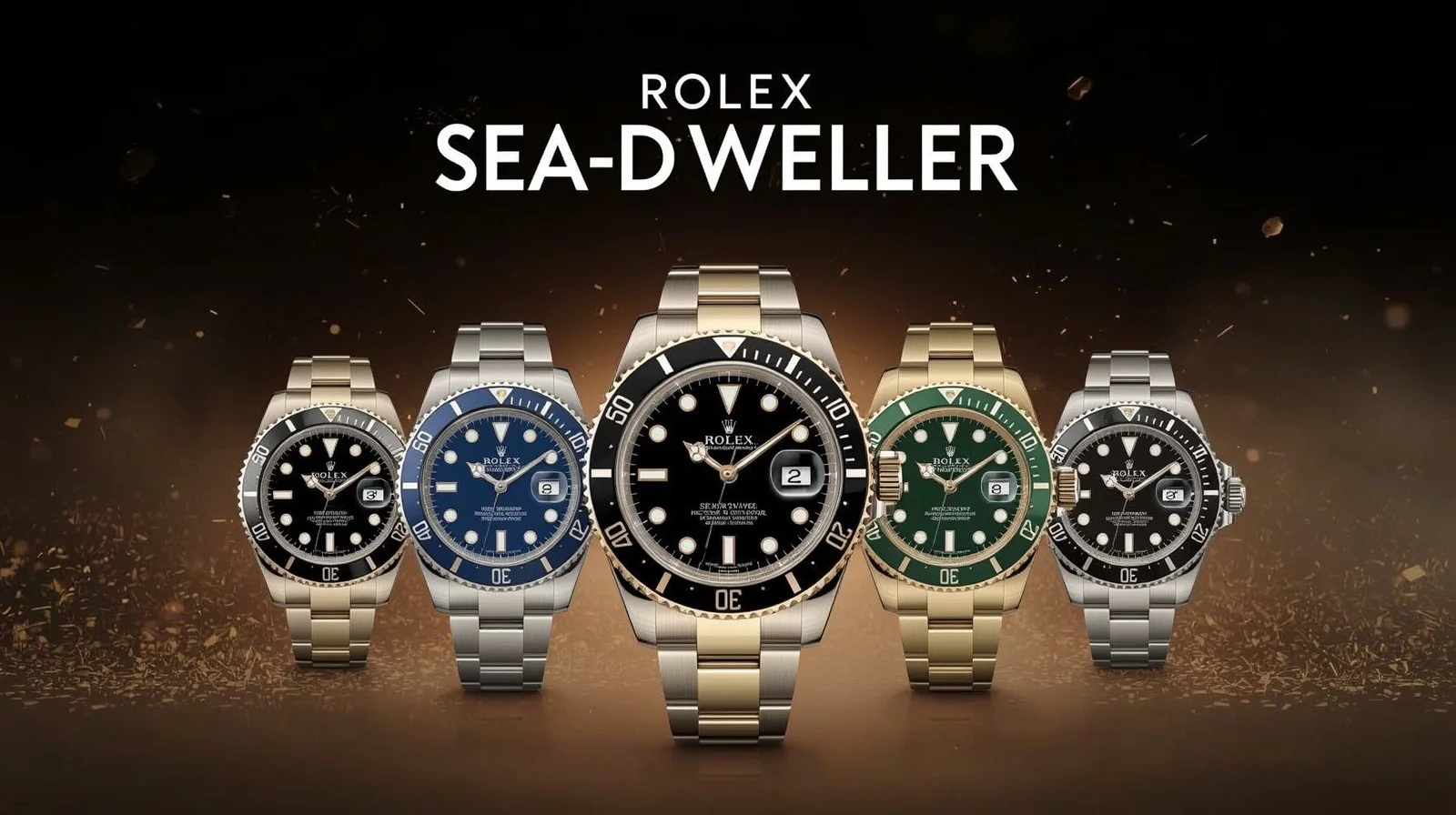
The Rolex Sea Dweller is more than a fancy watch to show off. It’s a specially designed tool for people who live and work deep underwater. The Rolex Sea-Dweller is known for being strong, reliable, and great for underwater use.
The Rolex Sea Dweller is a natural part of the conversation when you talk about deep-sea research, saturation diving, and engineering that doesn’t make any compromises. This watch is made to last through crushing pressure, helium exposure, and long diving trips. It shows that Rolex cares about how well their products work in the real world, not just how they look.
Rolex Sea-Dweller: Rising to the Challenge of Decompression
In 1967, Rolex released the Oyster Perpetual Sea-Dweller to help skilled saturation divers with a very real problem. The divers lived underwater for days or weeks at a time, breathing gas mixes rich in helium and living in areas with high pressure. Rolex came up with a groundbreaking fix for the problem that ordinary dive watches couldn’t handle.
The Sea-Dweller was made to handle decompression during rise, thanks to its famous helium escape valve. This new idea made it possible for helium gas to get out of the case without hurting the watch. This meant that the diver’s watch escaped the last and most dangerous part of deep-sea missions.
Rolex Sea Dweller Price
| Model Reference | Configuration | Approx. Retail Price (USD) | Notes |
|---|---|---|---|
| 126600 | Oystersteel, 43 mm | $13,200 | Classic steel Sea‑Dweller |
| 126603 | Oystersteel & Yellow Gold (Rolesor), 43 mm | $17,600 | Two‑tone luxury dive watch |
| Deepsea (e.g., 126660) | Oystersteel, 44 mm, Extreme Depth | $14,950 | Higher depth rating variant |
| Deepsea D‑Blue | Oystersteel, 44 mm, Gradient Dial | $14,950 | Special edition for deep‑sea explorers |
Rolex Sea-Dweller Models
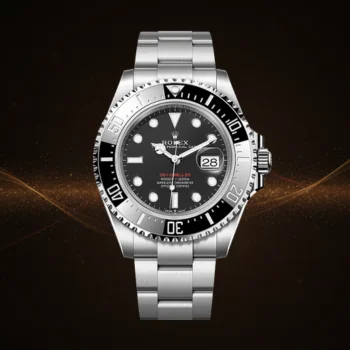
Rolex Sea-Dweller – Oyster, 43 mm, Oystersteel
Reference 126600
Price: Approx. $13,200 USD
- 43 mm Oyster case crafted from corrosion-resistant Oystersteel
- Waterproof up to 1,220 meters / 4,000 feet
- Built specifically for professional saturation diving
- Helium escape valve for safe decompression
- Unidirectional black Cerachrom ceramic bezel with platinum-coated numerals
- Scratch-resistant sapphire crystal with Cyclops date lens
- Rolex Calibre 3235 automatic movement
- Precision rated at −2/+2 seconds per day
- Approximately 70-hour power reserve
- Oyster bracelet with Glidelock extension system for wetsuit adjustment
- Highly legible black dial with long-lasting Chromalight blue lume
- Superlative Chronometer certified by Rolex
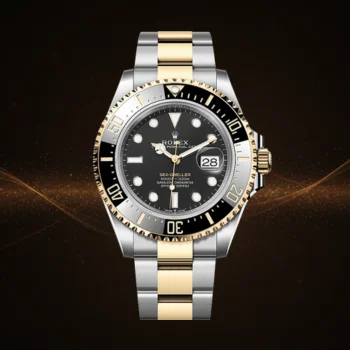
Rolex Sea-Dweller – Oyster, 43 mm, Oystersteel & Yellow Gold
Reference 126603
Price: Approx. $17,600 USD
- 43 mm Oyster case in Oystersteel and 18 ct yellow gold (Rolesor)
- Waterproof up to 1,220 meters / 4,000 feet
- Helium escape valve for saturation diving environments
- Black Cerachrom ceramic bezel with gold-tone markings
- Scratch-resistant sapphire crystal with Cyclops lens
- Rolex Calibre 3235 self-winding mechanical movement
- Precision of −2/+2 seconds per day
- Approximately 70-hour power reserve
- Oyster bracelet combining steel and yellow gold
- Secure Oysterlock clasp with Glidelock system
- Black dial with luminous hour markers for deep-sea visibility
- Blends professional dive performance with luxury aesthetics
Inhabiting the Sea
Life at Extreme Depths
Saturation diving changed the way people explored the ocean completely in the 1960s. Rather than having to go down and up all the time, divers stayed in pressurized habitats that were the same depth as where they were working. In other words,
- Longer missions
- Fewer decompression cycles
- Increased efficiency for underwater engineering
But this setting made a new problem for watches. Helium atoms are very small, so they could get through watch cases and get stuck inside.
Why Helium Is a Threat to Watches
Helium that was trapped expands during release. This pressure could be in classic watches:
- Force the crystal to pop off
- Damage seals
- Destroy the movement
Rolex added the helium release valve to the Sea-Dweller in 1967 to get around this problem. The valve opens by itself when internal pressure hits a certain amount, which lets the helium get out safely.
This one new idea changed pro dive watches for all time.
The Evolution of the Rolex Sea-Dweller
The New Face of Diving: Designed for Greater Depths
As professional underwater tasks started to go deeper and last longer, regular dive watches weren’t enough anymore. Rolex’s response was to keep improving the Sea-Dweller so that it would meet the needs of saturation dives.
Every upgrade worked on improving pressure resistance, legibility, and reliability. This made sure the watch could work perfectly in places where failure was not an option.
Increasing Depth Ratings Over Time
The Sea-Dweller could resist water up to 610 meters (2,000 feet) and was ahead of its time when it came out in 1967. Rolex went even further as diving technology improved. Starting in 1978, the Sea-Dweller could fight an amazing 1,220 meters (4,000 feet) of water. This evolution made the Sea-Dweller one of the best professional dive watches for real deep-sea work.
Tested Where It Truly Matters: Real-Life Conditions
The Rolex Sea-Dweller gained its reputation not only in controlled lab settings but also in the harsh conditions of the open ocean. Rolex thought that real-world testing was the only way to show true reliability, as pressure, darkness, and time come together to push both the diver and the equipment.
The Tektite Program
In 1969, the Sea-Dweller was very important to the Tektite program, a new project run by the US Government, NASA, and the US Navy. This project was about long-term underwater habitats and longer trips under the sea. The Sea-Dweller worked perfectly during tests, even though it was in conditions of constant pressure and saturation. This further confirmed its status as a reliable expert tool.
Unidirectional Bezel: Timing That Saves Lives
In deep-sea diving, keeping a correct record of time is very important for safety. The Sea-Dweller’s bezel can only move in one way, which stops the dive time from being accidentally extended.
Its graduated scale of 60 minutes allows close tracking, and the Cerachrom ceramic insert doesn’t scratch, corrode, or fade. Platinum-coated numbers will be easy to read for a long time, even in tough circumstances. Underwater, precision isn’t a choice; it’s a matter of life.
Rolex Sea-Dweller Key Features
| Feature | Details |
|---|---|
| Case Size | 43 mm |
| Case Material | Oystersteel / Oystersteel & Yellow Gold (Rolesor) |
| Water Resistance | Up to 1,220 meters / 4,000 feet |
| Diving Type | Professional saturation diving |
| Helium Escape Valve | Yes |
| Bezel | Unidirectional, black Cerachrom ceramic |
| Crystal | Scratch-resistant sapphire with Cyclops lens |
| Movement | Rolex Manufacture Calibre 3235 |
| Precision | −2/+2 seconds per day |
| Power Reserve | Approximately 70 hours |
| Dial | Black with Chromalight blue luminescence |
| Bracelet | Oyster bracelet with Glidelock extension |
| Certification | Rolex Superlative Chronometer |
Professional Excellence and Deep-Sea Innovation
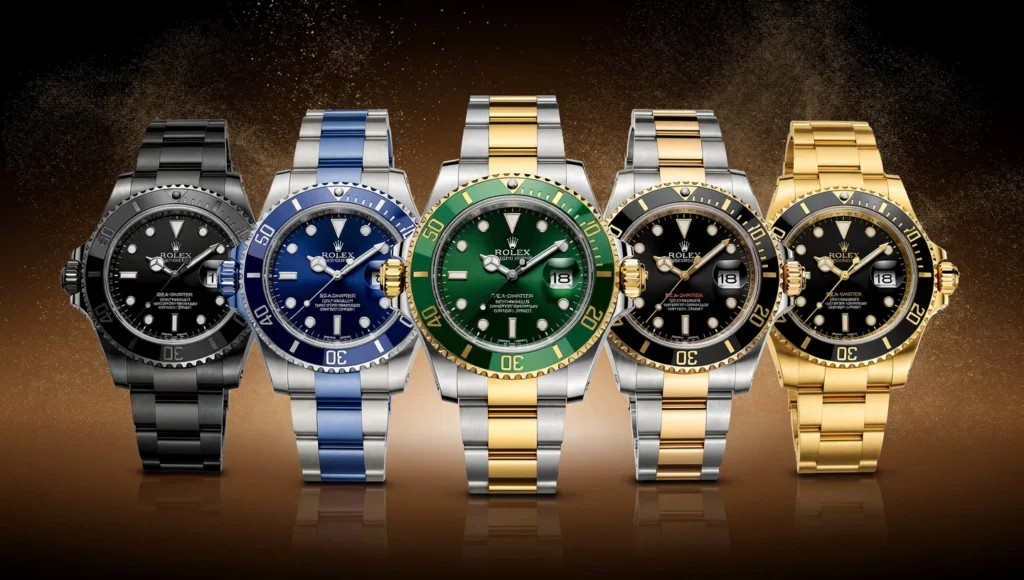
Rolex and COMEX
Rolex made a formal partnership in 1971 with COMEX (Compagnie Maritime d’Expertises), a French company that was a leader in deep-sea engineering and underwater work. The Rolex Sea-Dweller was worn by professional saturation divers on record-breaking trips thanks to this collaboration.
Rolex got a lot of useful information from real-world experience, while COMEX divers relied on the watch in some of the most difficult underwater settings ever. With this direct experience, the brand was able to keep improving the Sea-Dweller to make sure it met the high standards required for skilled deep-sea work.
Beyond Diving: Extreme Pressure Testing
The relationship with COMEX went well beyond field use. Rolex and COMEX worked together to build very advanced hyperbaric testing chambers that can create conditions of very high pressure, like those found deep underground.
Rolex’s Superlative Chronometer approval process now needs these chambers to work. Some tests recreate the pressure that would be felt at depths of up to 13,750 meters (45,112 feet), which is much deeper than a person could go.
At this level of testing, we can be sure that the Sea-Dweller is not only good for deep diving but also built to survive conditions even more extreme than any diver will ever experience.
Mastering Waterproofness
Hans Wilsdorf, the founder of Rolex, thought that a watch should be able to work anywhere, no matter what. He invented the Oyster case, which made it possible for all Sea-Dwellers to be made.
Key Waterproof Features
- Monobloc middle case
- Screw-down case back
- Screw-down Triplock winding crown
- Precision-engineered gaskets
All of these things together make sure that there is no exposure to water, pressure, or dust.
The Sea-Dweller Dial: Legibility in the Dark
It’s hard to see underwater most of the time, especially when you go deeper, where the light from the surface doesn’t reach. Rolex made the Sea-Dweller face so that it could be read right away.
Rolex Sea-Dweller vs SubmarinerThe big hour markers stand out against the deep black background, and the Chromalight display gives off a blue glow that lasts for a long time. This combo keeps the time readable, whether you’re just below the surface or more than a thousand meters below it.
Why the Rolex Sea-Dweller Still Matters Today
Even though digital dive computers are very popular now, the Rolex Sea-Dweller is still considered the standard for professional diving watches. It stands for mechanical dependability, scientific brilliance, and a history of success in very difficult settings. Putting on a Sea-Dweller is more than just putting on a watch; it’s like putting on decades of trust, creativity, and deep-sea exploration.
Rolex Sea-Dweller vs Submariner
| Feature | Rolex Sea-Dweller | Rolex Submariner |
|---|---|---|
| Case Size | 43 mm | 40 mm |
| Water Resistance | 1,220 m / 4,000 ft | 300 m / 1,000 ft |
| Helium Escape Valve | ✅ Yes | ❌ No |
| Bezel | Unidirectional Cerachrom | Unidirectional Cerachrom |
| Dial Design | Professional, highly legible | Clean, minimalist |
| Date Function | ✅ Instantaneous date with Cyclops | Optional (Submariner Date has Cyclops) |
| Movement | Rolex Calibre 3235 | Rolex Calibre 3230 / 3235 |
| Power Reserve | ~70 hours | ~70 hours |
| Bracelet | Oyster with Glidelock extension | Oyster with Glidelock extension |
| Use Case | Professional saturation diving | Recreational and professional diving |
| Overall Legacy | Extreme deep-sea tool watch | Iconic dive watch, versatile everyday use |
FAQs about Rolex Sea Dweller
Which Rolex Sea-Dweller should I buy?
Pick the Oystersteel (Reference 126600) for classic business use or the Oystersteel & Yellow Gold (Reference 126603) if you want a more expensive look.
How much is a Rolex Sea-Dweller?
Depending on the type and where it’s being sold, the price usually starts at around $13,000–$14,000 USD for the Oystersteel version and can be higher for two-tone or special editions.
Does a Rolex Sea-Dweller hold value?
Yes, Sea-Dweller watches tend to keep their value and often go up in price over time. This is because they are very popular, are considered classic, and are hard to find.
How to spot a fake Sea-Dweller Rolex?
Real Rolex quality is hard to copy. Look for exact engraving, the right movement sound, a smooth-moving second hand, the right weight, and official papers.
How to set time on a Rolex Sea-Dweller?
Please take off the crown, pull it to the right place, and slowly set the time forward or backward. Then, push the crown back down and screw it in to make it waterproof again.
How to wind a Rolex Sea-Dweller?
If the movement has stopped, unscrew the crown and turn it clockwise about 30–40 times to fully wind it.
Is a Rolex Sea-Dweller 16600 a good investment?
Yes, the vintage Sea-Dweller 16600 is popular with collectors and sells for a lot of money, so it’s a good purchase for many fans.